


Everything posted by 956 Worldwide
-
 When I read these stories I think about how Ira Glass adopted a pitbull that ruined his life. Insane to live this way even before the mauling, with two aggressive dogs that can’t tolerate each other. WTF are you doing!
 -
It seems pretty clear that a major purpose for these high-visibility, publicized operations is to bring ICE officers into highly-charged and emotional conflicts with political opposition-aligned citizens so they will be conditioned to dislike them and feel comfortable using violence against them.
The real loser in the Williams saga is Lane Kiffin and I think that’s beautiful. Also, watching ugly contract battles and trade demands where you wonder how a player will actually perform once back in a uniform was for sure one of the cool parts of pro football, so glad it’s now at the college level!
The average age of Indiana’s roster is over 22– older than the average college grad. I tip my hat to Cignetti for playing the game. But college football is too old, and that’s crazy. I want to see hypertalented young players and all the craziness that brings, not grown men doing jobs.
Should be one transfer as an undergrad, then one grad transfer. I’d be fine with a minimum credit hour rule like this, too. Exception if the HC leaves or dies.
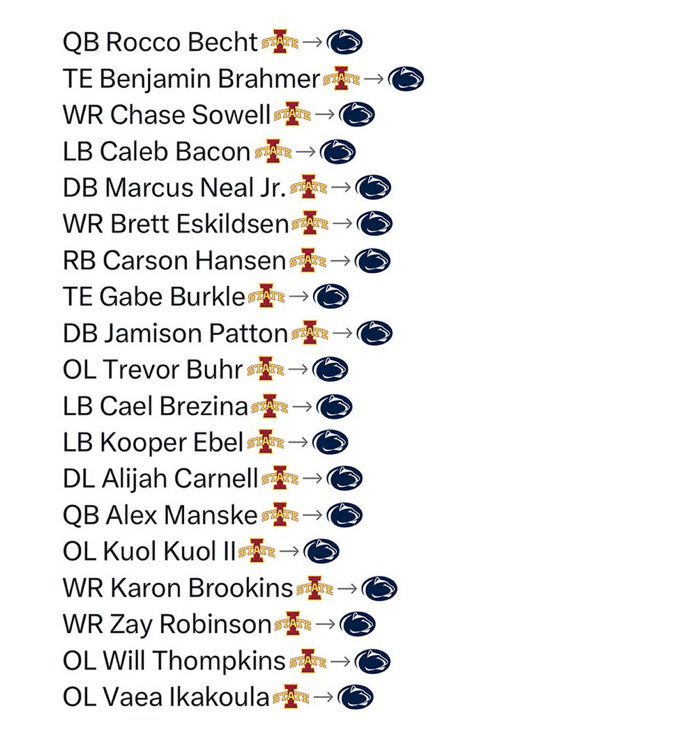
Imagine being a Cyclone and you don’t make the cut for Matt Campbell to take you to Penn State LOL.
 At some point you’d think that calling your country a predator would cause the mouth to stop moving for a bit.
I’m not stealing your paycheck. I’m controlling the cash flow from it.
Yeah this is SUPER unconstitutional.
I hope this kid is FUCKED.
Fair enough, as very few people self-identify. What is undeniable is that a host of public officials on the left have done a rhetorical or actual about-face to a more enforcement, law and order-oriented approach. There is a spectrum between “public safety” and regulation enforcement that is not bright. Many issues are not “safety” in the sense of violence but remain quality of life issues— shoplifting, vandalism, vagrancy, public nuisance. These give an impression of disorder and unpleasantness and people vote with their feet by just avoiding places where this is a problem, and eventually vote with their votes. They can’t just be dismissed as “part of a big city.” Not even a reactionary issue, Marxists recognized that the lumpenproletariat— vagrants, swindlers, petty criminals, the chronically unemployed, panhandlers, pimps, drunks— lacked class consciousness and did not engage in productive work. Under Communism they were mean to disappear naturally but the theorists were vague on what to do with the extant anti-social elements. Mao toyed with the idea of using them, but realized their presence negatively polarized the peasantry and so chose to do work and re-education camps. The Soviets passed a host of anti-parasite and anti-hooliganism laws to deal with them and made them either sweep streets or packed them off to penal work colonies. If you talk to people who lived through the collapse, no one really misses the ration cards or government stores. They do bemoan the reappearance of деклассированные элементы into public life and the failure of the new capitalist state to defend the interests of нормальные люди. I would be fascinated to see someone actually pitch Marxism or an off-shoot. Make shoplifters and vagrants sweep subway stations or something under the watchful eye of baton-wielding militia recruited from the young cadres so they develop an ability to engage in productive work. Not that I’d vote for it. Just that there is a mechanism there to address issues instead of a lot of assurances that more social workers will fix it.
Well, the mayor of NYC doesn’t have the levers to create a police state. He does have plenty of levers to really fuck up law and order and there’s a track record of the far left doing exactly that at the local levels. There are also perverse incentives to do it because creating structural change in things like real estate and housing markets is hard and you run into extremely powerful equities capable of pushing back but you can rack up quick “wins” with things like tweaking enforcement priorities.
The Constitution is in fact designed to prevent the executive from raising his own sources of revenue to fund things he wants to do.
My experience with shitposters and edgelords of all types is that it’s only shitposting until the Overton Window shifts. Mamdani will succeed or fail based on whether the technocrats or ideologues win battles throughout the institutions. Law and public safety will be most important because success in delivering any public service— transit, housing, public facilities, parks, education— is downstream of safety and order. This is incidentally where the only moderately competent communists and hard-leftists have course corrected and managed to deliver a few wins, and where most western hard-leftists wreck themselves.
Being a Communist is a symptom of a disordered and incompetent mind. She will be unlikely to do much widespread damage but is axiomatic she will not do anything good. There has never been a competent administrator who has actually believed that stuff. The two don’t go together.
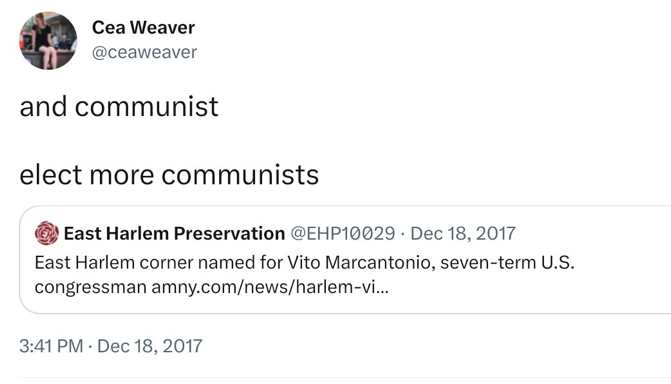
Her posts are not about land trusts. I think its absolutely fair to call her a communist. Or someone who supports electing communists.
At some point you’d think that calling your country a predator would cause the mouth to stop moving for a bit.
I’m not stealing your paycheck. I’m controlling the cash flow from it.
Yeah this is SUPER unconstitutional.
I hope this kid is FUCKED.
Fair enough, as very few people self-identify. What is undeniable is that a host of public officials on the left have done a rhetorical or actual about-face to a more enforcement, law and order-oriented approach. There is a spectrum between “public safety” and regulation enforcement that is not bright. Many issues are not “safety” in the sense of violence but remain quality of life issues— shoplifting, vandalism, vagrancy, public nuisance. These give an impression of disorder and unpleasantness and people vote with their feet by just avoiding places where this is a problem, and eventually vote with their votes. They can’t just be dismissed as “part of a big city.” Not even a reactionary issue, Marxists recognized that the lumpenproletariat— vagrants, swindlers, petty criminals, the chronically unemployed, panhandlers, pimps, drunks— lacked class consciousness and did not engage in productive work. Under Communism they were mean to disappear naturally but the theorists were vague on what to do with the extant anti-social elements. Mao toyed with the idea of using them, but realized their presence negatively polarized the peasantry and so chose to do work and re-education camps. The Soviets passed a host of anti-parasite and anti-hooliganism laws to deal with them and made them either sweep streets or packed them off to penal work colonies. If you talk to people who lived through the collapse, no one really misses the ration cards or government stores. They do bemoan the reappearance of деклассированные элементы into public life and the failure of the new capitalist state to defend the interests of нормальные люди. I would be fascinated to see someone actually pitch Marxism or an off-shoot. Make shoplifters and vagrants sweep subway stations or something under the watchful eye of baton-wielding militia recruited from the young cadres so they develop an ability to engage in productive work. Not that I’d vote for it. Just that there is a mechanism there to address issues instead of a lot of assurances that more social workers will fix it.
Well, the mayor of NYC doesn’t have the levers to create a police state. He does have plenty of levers to really fuck up law and order and there’s a track record of the far left doing exactly that at the local levels. There are also perverse incentives to do it because creating structural change in things like real estate and housing markets is hard and you run into extremely powerful equities capable of pushing back but you can rack up quick “wins” with things like tweaking enforcement priorities.
The Constitution is in fact designed to prevent the executive from raising his own sources of revenue to fund things he wants to do.
My experience with shitposters and edgelords of all types is that it’s only shitposting until the Overton Window shifts. Mamdani will succeed or fail based on whether the technocrats or ideologues win battles throughout the institutions. Law and public safety will be most important because success in delivering any public service— transit, housing, public facilities, parks, education— is downstream of safety and order. This is incidentally where the only moderately competent communists and hard-leftists have course corrected and managed to deliver a few wins, and where most western hard-leftists wreck themselves.
Being a Communist is a symptom of a disordered and incompetent mind. She will be unlikely to do much widespread damage but is axiomatic she will not do anything good. There has never been a competent administrator who has actually believed that stuff. The two don’t go together.
Her posts are not about land trusts. I think its absolutely fair to call her a communist. Or someone who supports electing communists.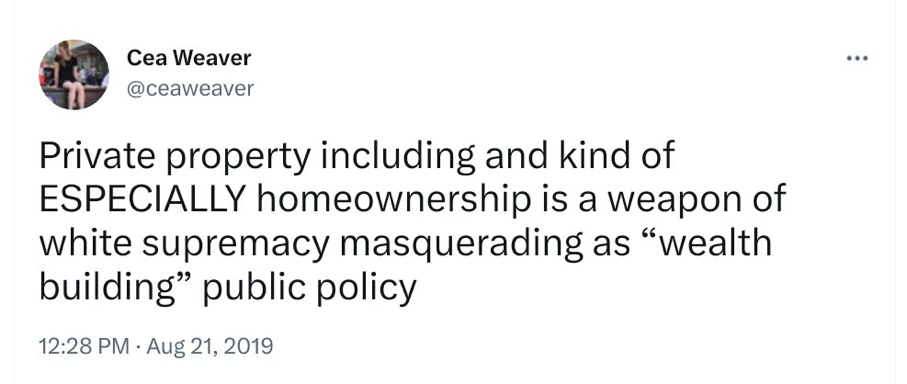
 This kid can get bent. I desperately hope that UW is able to force him to stay and they should bench him after he’s played enough games to use up his eligibility that year. Start a whisper campaign about attitude and character, locker room cancer, etc. I’d do that if I were Fisch. He’s gotta have fuck you money by now.
More likely we will again try to purchase it from the Danes and then will be rebuffed, then we will try to pressure the Greenland government to sign a Compact of Free Association and declare independence all at once. Accompanied by the stupidest hybrid campaign ever seen. A reminder that Greenland has the population of Wichita Falls. A reminder we don’t need to really land a small expeditionary force” since—- WE HAVE A MILITARY BASE THERE. I could see an option “C” to infuriate the Danes so much they try to revisit the terms of those agreements which we’d use as a “no choice” excuse. Luckily the Danes are a sober and intelligent people who are not prone to fits of pride. Petition to have the Kingdom annex us for like, 50 years.
This is exactly what our Constitution was designed to prevent and at this point any benefit of the doubt— if you had it— is gone.
The stab in the back!
Nothing says “avatar of the will of the people” like your entire palace guard consisting of foreigners.
@wildcat09 An anecdote from Uzbekistan: An unnamed company had to rent warehouses to store its pallets of local cash because the government refused to let them convert it into hard currency and putting it into a local bank meant that you basically lost access without paying a bribe. Occasionally the government would offer to convert but only if they took a 20 percent haircut. The firm had all this money listed as profit on its balance sheets, and walking away would have caused issues with auditors so it chose to maintain a minimum local presence and continue trying to solve the issue. The government felt this was very clever and would tell them that the money belonged to Uzbekistan and shouldn’t leave. One can imagine what this did to the investment climate. He mentions that the government was happy to see their educated citizens leave. I mentioned it above. It is a classic feature of idiot third world socialism, as opposed to what the Russians and East Europeans did after a course correction and the Chinese after a longer one. Those regimes internalized that a functioning country, even one building socialism, needed an intelligentsia and competent technical, scientific, and administrative class. They used a range of coercive and persuasive methods to build and retain them. The Berlin Wall was meant to keep the intelligent and talented IN, not the capitalists out. Idiot third world socialism is cunning, not smart. It is true that an illiterate and impoverished populace is easier to cow and rule over; and the leaders have the mentality of a successful crime kingpin; not realizing that this criminal mentality cannot enrich itself forever in the absence of prosperous rule followers to prey on. There is also internalized the deep idiot third world socialist belief that anyone who has or creates an extra measure of anything: wealth, intelligence, talent— must have somehow attained it by dubious or criminal means since that is the way they look at the world. (See: Cambodia and executing all the literate). The Chinese and Russians would show off their talented and intelligent as proof of what socialism could create. The idiot third world socialist simply tears down or welcomes their flight so that the promised equality may come prevail.
This kid can get bent. I desperately hope that UW is able to force him to stay and they should bench him after he’s played enough games to use up his eligibility that year. Start a whisper campaign about attitude and character, locker room cancer, etc. I’d do that if I were Fisch. He’s gotta have fuck you money by now.
More likely we will again try to purchase it from the Danes and then will be rebuffed, then we will try to pressure the Greenland government to sign a Compact of Free Association and declare independence all at once. Accompanied by the stupidest hybrid campaign ever seen. A reminder that Greenland has the population of Wichita Falls. A reminder we don’t need to really land a small expeditionary force” since—- WE HAVE A MILITARY BASE THERE. I could see an option “C” to infuriate the Danes so much they try to revisit the terms of those agreements which we’d use as a “no choice” excuse. Luckily the Danes are a sober and intelligent people who are not prone to fits of pride. Petition to have the Kingdom annex us for like, 50 years.
This is exactly what our Constitution was designed to prevent and at this point any benefit of the doubt— if you had it— is gone.
The stab in the back!
Nothing says “avatar of the will of the people” like your entire palace guard consisting of foreigners.
@wildcat09 An anecdote from Uzbekistan: An unnamed company had to rent warehouses to store its pallets of local cash because the government refused to let them convert it into hard currency and putting it into a local bank meant that you basically lost access without paying a bribe. Occasionally the government would offer to convert but only if they took a 20 percent haircut. The firm had all this money listed as profit on its balance sheets, and walking away would have caused issues with auditors so it chose to maintain a minimum local presence and continue trying to solve the issue. The government felt this was very clever and would tell them that the money belonged to Uzbekistan and shouldn’t leave. One can imagine what this did to the investment climate. He mentions that the government was happy to see their educated citizens leave. I mentioned it above. It is a classic feature of idiot third world socialism, as opposed to what the Russians and East Europeans did after a course correction and the Chinese after a longer one. Those regimes internalized that a functioning country, even one building socialism, needed an intelligentsia and competent technical, scientific, and administrative class. They used a range of coercive and persuasive methods to build and retain them. The Berlin Wall was meant to keep the intelligent and talented IN, not the capitalists out. Idiot third world socialism is cunning, not smart. It is true that an illiterate and impoverished populace is easier to cow and rule over; and the leaders have the mentality of a successful crime kingpin; not realizing that this criminal mentality cannot enrich itself forever in the absence of prosperous rule followers to prey on. There is also internalized the deep idiot third world socialist belief that anyone who has or creates an extra measure of anything: wealth, intelligence, talent— must have somehow attained it by dubious or criminal means since that is the way they look at the world. (See: Cambodia and executing all the literate). The Chinese and Russians would show off their talented and intelligent as proof of what socialism could create. The idiot third world socialist simply tears down or welcomes their flight so that the promised equality may come prevail.









Football ...
Basketball ...
Baseball ...
Other Sports ...
Futbol ...
🤫995🤫 ...
Gambling ...
Movies & TV ...
Music ...
Hobbies ...
Lulz ...
Food & Travel
...
Daily Texan ...
Business & Markets ...
Cloak Room ...
Help ...
For Sale ...
Board Discussion ...
Advertise...
Tailgate Donations
Account
Search
Configure browser push notifications
Chrome (Android)
- Tap the lock icon next to the address bar.
- Tap Permissions → Notifications.
- Adjust your preference.
Chrome (Desktop)
- Click the padlock icon in the address bar.
- Select Site settings.
- Find Notifications and adjust your preference.
Safari (iOS 16.4+)
- Ensure the site is installed via Add to Home Screen.
- Open Settings App → Notifications.
- Find your app name and adjust your preference.
Safari (macOS)
- Go to Safari → Preferences.
- Click the Websites tab.
- Select Notifications in the sidebar.
- Find this website and adjust your preference.
Edge (Android)
- Tap the lock icon next to the address bar.
- Tap Permissions.
- Find Notifications and adjust your preference.
Edge (Desktop)
- Click the padlock icon in the address bar.
- Click Permissions for this site.
- Find Notifications and adjust your preference.
Firefox (Android)
- Go to Settings → Site permissions.
- Tap Notifications.
- Find this site in the list and adjust your preference.
Firefox (Desktop)
- Open Firefox Settings.
- Search for Notifications.
- Find this site in the list and adjust your preference.